

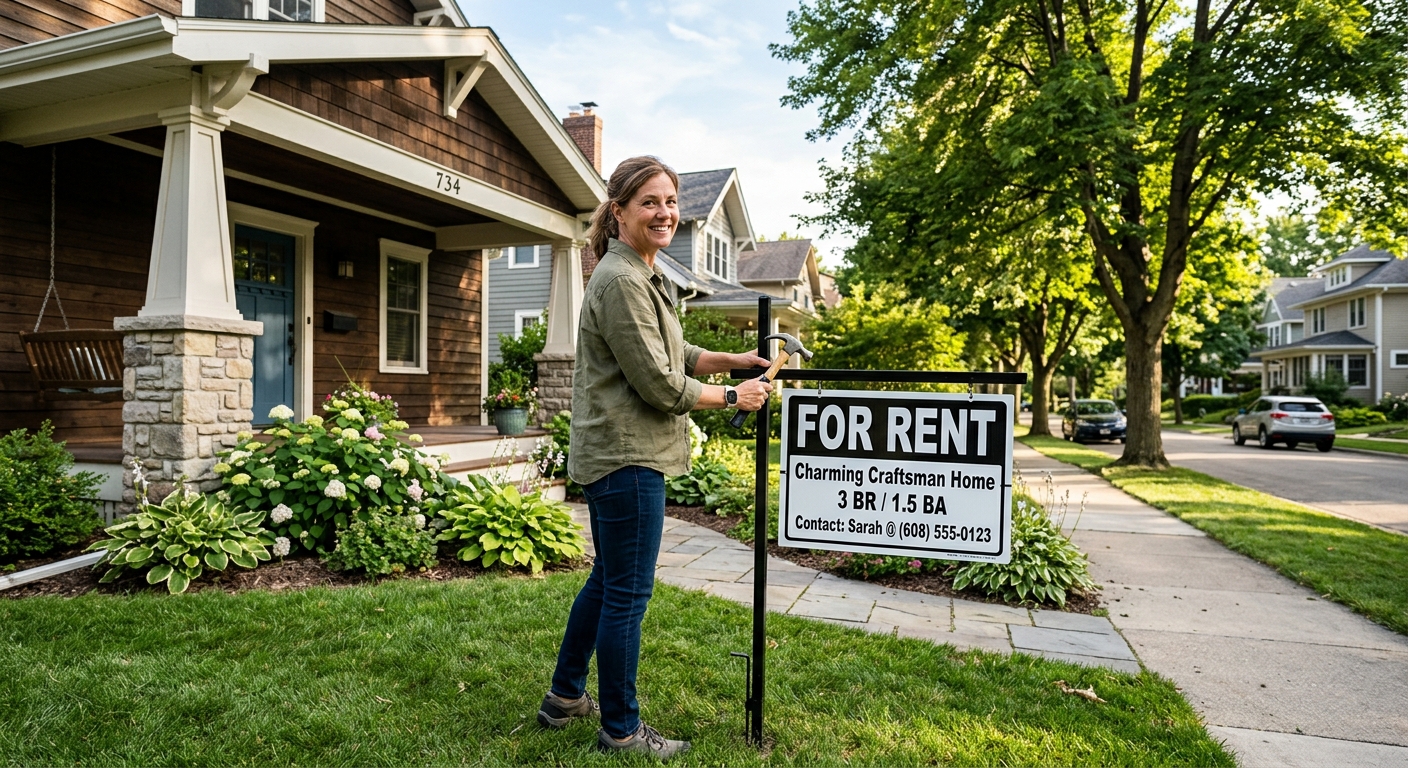
How to Get 20 Qualified Tenant Applicants This Week Without Spending a Dollar on Paid Ads
A vacant unit is a leaking bucket. Here's the exact, no-budget process Wisconsin landlords can run this week to fill it with qualified renters, not just warm bodies.
Wisconsin's rental market has tightened fast. Statewide vacancy sits around 4%, well under the national rate, and in metros like Milwaukee and Madison the swing has been dramatic year over year. That's good news if you own a rental, but it doesn't fill your unit for you. If you're staring down an empty property and a mortgage due either way, "we'll get some traffic eventually" isn't a plan. You need applicants, and you need them fast.
The good news: getting to 20 applications in a week doesn't require a marketing budget. It requires a process. Here's the one we run on our own listings at Wisconsin Property Managers, broken into steps you can execute starting today.
First, a warning: 20 applicants isn't the real goal
Before you chase volume, get clear on what you're actually chasing. Twenty random applications from unqualified renters is worse than five from people who can actually pass screening: it just means five times the paperwork before you land on the same tenant. The goal of everything below is 20 qualified applicants: people who can meet your income requirement, have a clean rental history, and are genuinely ready to sign this month. Every step is designed to filter for that, not just generate clicks.
Step 1: Fix the listing before you touch distribution
Every free listing site rewards (and ranks higher) listings that get engagement, and engagement starts with the photos and the description. This is the single highest-leverage 30 minutes you'll spend all week, because a weak listing wastes every distribution channel below.
- Shoot photos in daylight, lights on, every room decluttered. Ten to fifteen photos minimum: kitchen, living space, each bedroom, bathroom, and the exterior.
- Lead your description with the specifics renters actually filter on: rent, deposit, square footage, bed/bath count, pet policy, parking, and move-in date. Don't bury it in adjectives.
- Name the neighborhood advantages plainly: walkable to downtown, near the bus line, close to which schools or employers. Wisconsin renters searching Beloit, Janesville, or Madison listings are often comparing commute distance first.
- State your qualifying criteria up front (income at 3x rent, credit minimum, no prior evictions). This isn't a legal requirement everywhere, but it self-selects serious applicants and cuts down on the tire-kickers who waste your week.

Step 2: Post everywhere that's free, and don't skip the boring ones
You don't need paid ads to reach the volume of eyeballs that produces 20 applicants. You need your listing live on every channel a renter might actually search, on the same day. Set aside an hour and post to:
- Zillow Rental Manager: free to list, and it auto-syndicates to Trulia and HotPads, covering three high-traffic sites from one post.
- Zumper: free listings that also push out to PadMapper and Facebook Marketplace automatically.
- Facebook Marketplace and local Facebook groups: search "Beloit rentals," "Janesville apartments for rent," or your specific city and post directly in the community groups, not just Marketplace. This is often where Wisconsin renters look first.
- Craigslist: still gets meaningful traffic in smaller Wisconsin markets where Zillow competition is thinner.
- Apartments.com free listing tier: worth the ten minutes even at the basic level.
This is exactly the searchable-listing approach we use to keep our own managed units visible: the more places a serious renter can stumble onto your unit without hunting for it, the faster your applicant count climbs.
Step 3: Activate the network you already have
Your fastest, highest-quality applicants usually aren't strangers scrolling Zillow at midnight, they're one referral away from someone who already trusts you. Before day two is over:
- Text or email your current tenants and ask if they know anyone looking. Offer a small referral credit ($50–$100 off next month's rent) if their referral signs a lease. Existing tenants tend to refer people similar to themselves, which is usually a good sign.
- Reach out to any past applicants you turned down for reasons other than screening (wrong move-in date, wrong bedroom count); they may fit this unit.
- Loop in your handyman, cleaner, or any contractor who works your rentals: tradespeople hear about people moving before anyone else does.
- Post in your own personal social network, not just public rental groups. A short "know anyone looking for a place near X?" post reaches people a stranger's listing never will.
Word-of-mouth and referrals convert at a far higher rate than cold listing traffic because the trust is already built in before they ever fill out an application.
Step 4: Remove every point of friction from applying
Traffic doesn't matter if people bounce before they apply. Every extra step between "interested" and "submitted" costs you applicants, especially the ones with other options.
- Use an online application, not a PDF someone has to print, scan, and email back. We run all of our applications through our online resident portal for exactly this reason: a five-minute mobile-friendly form gets filled out on the spot, while a downloadable PDF gets forgotten in fifteen open tabs.
- Put the application link directly in every listing and every message, not buried behind "contact us for details."
- Offer same-day or next-day showings. If someone has to wait until next weekend to see the unit, they'll have already applied somewhere else.
- Consider a self-guided showing option (lockbox or smart lock) for daytime hours; it multiplies the showing slots you can offer without multiplying your own schedule.

Step 5: Respond like the inquiry is a hot lead, because it is
In a tight rental market, the applicant messaging you at 6 p.m. is also messaging three other landlords at 6:05. Speed to response is one of the few truly free levers you have, and most self-managing landlords leave it on the table simply because they're checking email once a day.
- Turn on notifications for every listing platform and check them at least three times a day during your applicant push.
- Have a saved reply template with the application link, showing availability, and qualifying criteria so you can respond in under a minute.
- If you can't respond within a couple hours consistently, this is usually the first sign it's time to hand leasing off to a property manager: a missed inquiry is a lost applicant, full stop.
Step 6: Screen fast enough that good applicants don't walk away
Once the applications start coming in, the process can't stall. Qualified renters in a competitive market are applying to multiple units simultaneously and will take whichever offer comes back first. Run a consistent, rigorous background and credit check on every applicant, verifying income, rental history, and eviction record, and turn decisions around within 24 to 48 hours. This is the step that turns "20 applicants" into "20 applicants who trust you enough to actually sign," and it's the one most self-managing landlords under-invest in because it's tedious, not because it's hard.
The 7-day plan, laid out
- Day 1: Reshoot photos, rewrite the listing, set your qualifying criteria and application link.
- Day 2: Post to Zillow Rental Manager, Zumper, Apartments.com, Craigslist, Facebook Marketplace, and every relevant local Facebook group.
- Day 3: Message current tenants and past applicants, post to your personal network, call your contractors.
- Days 4–6: Respond to every inquiry within the hour, run showings daily (including evenings), push the application link relentlessly.
- Day 7: Screen the applications that came in, verify income and rental history, and make your decision on the strongest candidate.

When this stops being worth your time
This process works, but running it right takes a full week of focused effort per vacancy, every time a unit turns over. If you're managing more than one property, or you've noticed inquiries slipping through because you're slow to respond, that's usually the moment self-managing starts costing more in lost rent than a property manager would cost in fees.
Tired of running this playbook yourself every time a unit turns over?
Wisconsin Property Managers handles marketing, screening, and leasing for owners across Southern Wisconsin, so your units stay filled with qualified tenants without eating your week.
See Our Property Management Services